
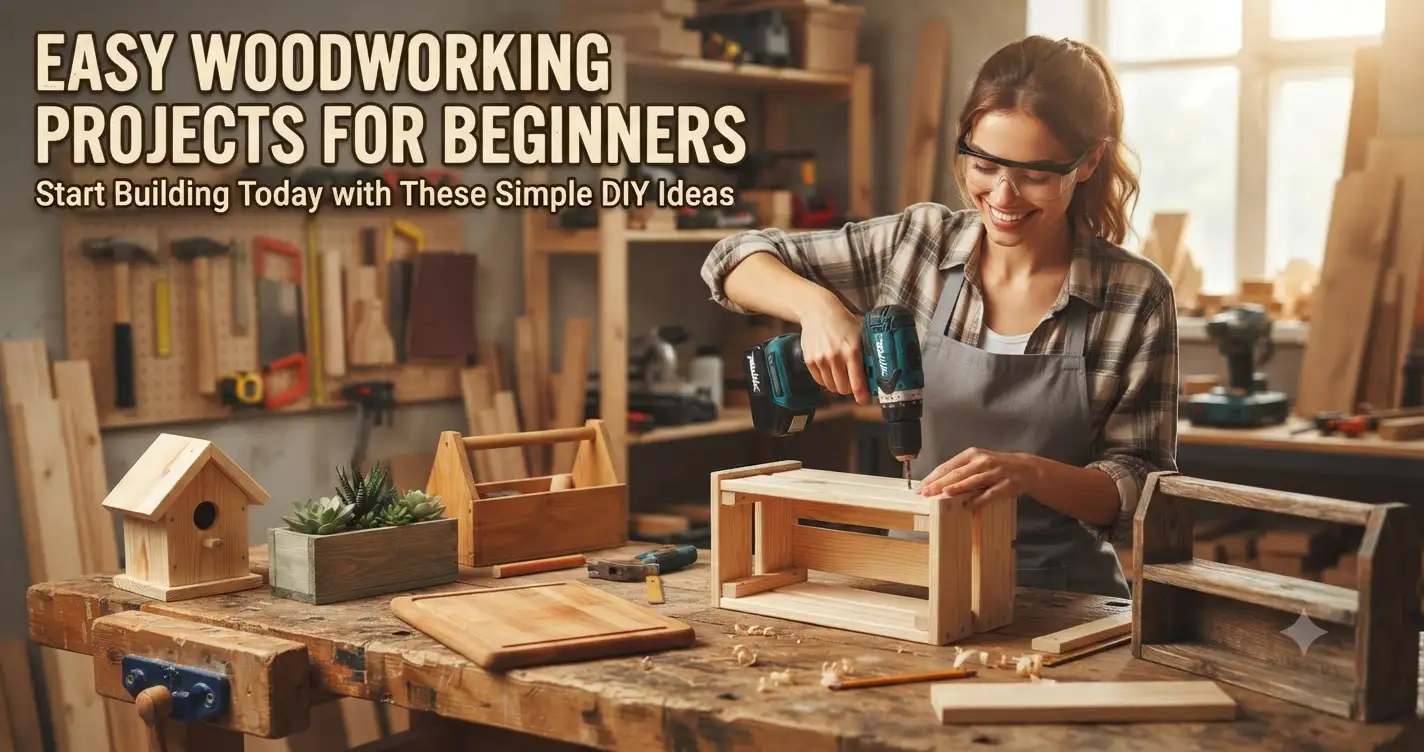
Want to try woodworking but have no idea where to start? The good news is that you don’t need a professional workshop or years of experience to make something useful from wood.
The best woodworking projects for beginners are simple enough to learn from, but useful enough to make you want to keep building. With a few basic tools, some affordable lumber, and a little patience, you can create shelves, organizers, planters, stools, and decorative pieces for your home.
Here are 15 easy woodworking projects for beginners to try in 2026.
1. Simple Wooden Shelf
A basic wall shelf is one of the easiest woodworking projects to start with.
You mainly need a wooden board, sandpaper, screws, and suitable wall hardware. Cut the board to your preferred length, smooth the edges, and attach brackets or build simple supports.
You can leave the wood natural for a minimalist look or stain it to match your room.
Beginner tip: Start with a short shelf. A smaller project makes measuring, sanding, and installation easier.
2. Wooden Phone Stand
A phone stand requires very little material and can teach you several basic woodworking skills.
You can make one from a small piece of hardwood or a leftover board. The basic design uses an angled slot that supports the phone while leaving enough space for the charging cable.
This project is particularly useful for beginners because you can finish it quickly.
Once you’ve mastered the basic version, experiment with different shapes and wood finishes.
3. Small Wooden Planter Box
A wooden planter box is a practical project for anyone who wants to combine woodworking with gardening.
Build a simple rectangular box using several boards. Sand the surfaces thoroughly and make sure the structure is strong enough to hold soil.
If the planter will stay outdoors, choose suitable outdoor wood and use a finish designed for exterior conditions.
Important: Provide appropriate drainage rather than creating a completely sealed container for plants.
4. Rustic Wooden Picture Frame
Making your own picture frame is a great way to practice accurate measuring and cutting.
Four pieces of wood can create a simple rectangular frame. The corners can be joined in several ways, depending on the tools and skill level you have.
After sanding, you can paint, stain, or leave the frame unfinished.
For a rustic appearance, small imperfections can become part of the character of the finished piece.
5. Wooden Key Holder
Always losing your keys?
Build a small wall-mounted key holder.
Start with a narrow wooden board and add several hooks. You can personalize it with paint, lettering, numbers, or a simple engraved design.
This project is small enough to complete in an afternoon and gives you practical experience with drilling and hardware installation.
6. Simple Wooden Serving Tray
A wooden serving tray looks more complicated than it actually is.
You need a flat wooden base and two handles or side rails. Sand every surface carefully because trays are frequently handled.
You can make the tray narrow for drinks or larger for breakfast and snacks.
A food-safe finish is important if the finished surface will come into direct contact with food.
7. Floating-Style Wall Shelf
Once you’re comfortable making a basic shelf, try a floating-style design.
The key challenge is creating a secure mounting system that can support the intended load. Don’t rely on appearance alone—the wall attachment needs to be appropriate for the wall type and the weight being supported.
This project can give a room a clean, modern appearance while helping you learn more about mounting and structural support.
8. Wooden Bookends
Bookends are another excellent beginner project because they require only small pieces of wood.
You can create simple L-shaped bookends or experiment with geometric designs.
Try using contrasting pieces of wood for a more interesting appearance. Sand the corners well and add felt pads underneath to protect furniture.
They are also a good way to use leftover pieces from larger projects.
9. Simple Step Stool
A small step stool is useful around the home and can introduce beginners to stronger joinery and basic structural design.
Because people may stand on a stool, construction quality matters much more than it does for decorative projects.
Use appropriately strong materials, create stable joints, and make sure the finished stool sits level.
If you’re completely new to woodworking, consider building several smaller projects before attempting a load-bearing stool.
10. Wooden Desk Organizer
A desk organizer can turn scraps of wood into something genuinely useful.
Create several compartments for pens, notebooks, cables, or small accessories. The design can be as simple or creative as you want.
You can build separate compartments or drill holes into a solid wooden block for pencils and tools.
A desk organizer is also an excellent project for practicing accurate drilling.
11. Wooden Coat Rack
A simple coat rack can be made from one board and several hooks.
Sand the board, round or smooth the edges, mark the hook positions, and attach the hardware.
For a modern look, use a clean natural finish. For a farmhouse-inspired style, try a distressed or painted appearance.
Make sure the rack is securely attached to the wall before using it for heavy coats or bags.
12. Small Outdoor Bench
If you’re ready for a slightly larger project, consider a basic outdoor bench.
A straightforward design can use a seat, legs, and support pieces. The important part is keeping the structure square and stable.
Measure twice before cutting and check that both sides are symmetrical.
For outdoor use, select materials and finishes appropriate for weather exposure. Inspect the bench periodically for loose hardware or wood deterioration.
13. Wooden Candle Holder
A candle holder is a small decorative project that allows you to experiment with drilling, shaping, and finishing.
A simple block of wood with one or more appropriately sized recesses can create an attractive centerpiece.
However, wood is combustible. Never leave a burning candle unattended, and make sure the design keeps an open flame safely away from surrounding wood and other flammable materials.
Battery-operated candles can be a safer alternative for decorative use.
14. Simple Wooden Storage Crate
Storage crates are useful throughout the home.
You can build a basic open box from several boards and add handles on the sides. Use them for books, blankets, toys, gardening supplies, or workshop materials.
You can also stack several matching crates to create flexible storage.
Before stacking, make sure the crates are designed and constructed to handle the expected load.
15. Wooden Plant Stand
A plant stand can make a simple indoor plant look much more intentional.
A beginner-friendly design can use four legs connected to a square or rectangular top platform.
Accurate leg lengths are important because even a small difference can make the stand wobble.
Start with a low, compact design before attempting tall or multi-level plant stands.
What Tools Do Beginners Need for Woodworking?
You don’t need every woodworking tool available to get started.
A basic beginner setup might include:
- Tape measure
- Pencil and marking tools
- Combination square
- Hand saw or suitable power saw
- Drill and drill bits
- Screwdriver bits
- Clamps
- Sandpaper
- Safety glasses
- Hearing protection when using loud power tools
- Dust protection appropriate to the work environment
The exact tools depend on the projects you plan to build.
If you’re starting from scratch, buy tools as you need them rather than purchasing an entire workshop at once.
What Wood Is Best for Beginner Projects?
There isn’t one perfect wood for every beginner project.
Pine is commonly used for basic projects because it is relatively affordable and easy to work with.
Poplar is another option for painted projects and can be easier to work with than some harder woods.
Hardwoods such as oak and maple can produce beautiful, durable projects, but they may require more effort and can cost more.
For your first few projects, choose straight boards with minimal damage and avoid buying more expensive material until you’re comfortable with measuring and cutting accurately.
How Can Beginners Avoid Common Woodworking Mistakes?
The biggest beginner mistake is rushing.
Measure carefully before making a cut. Mark your measurements clearly and check them again before turning on a saw.
Another common mistake is skipping sanding. Rough edges can make an otherwise good project look unfinished and can create splinters.
It’s also easy to underestimate the importance of clamps. Holding pieces securely while drilling, gluing, or assembling can make a major difference in accuracy.
Finally, don’t treat safety equipment as optional.
Basic Woodworking Safety Tips
Woodworking can be rewarding, but tools can cause serious injuries when used incorrectly.
Always read the manufacturer’s instructions for power tools and use the appropriate guards and safety equipment.
Keep your hands away from cutting paths, secure your workpiece properly, and avoid loose clothing around rotating machinery.
Good ventilation and appropriate dust control are also important, particularly when sanding or cutting materials that produce significant dust.
If you’re unsure how to operate a tool safely, learn the correct technique before starting the project.
How Do You Choose Your First Woodworking Project?
Choose a project based on your current skills, available tools, workspace, and time.
If you’ve never worked with wood before, start with something small such as a phone stand, key holder, bookends, or desk organizer.
After learning basic measuring, cutting, drilling, sanding, and assembly, move toward shelves, planters, trays, and larger furniture.
The goal isn’t to build the most impressive project immediately. It’s to finish something successfully and learn skills that make your next project easier.
Final Thoughts
Woodworking doesn’t have to begin with an expensive workshop or complicated furniture plans.
Start small, learn the basics, and build projects that you will actually use. A simple shelf, phone stand, planter, or organizer can teach you valuable skills while giving you something useful to show for your effort.
As your confidence grows, you can move into larger projects and more advanced joinery.
The best woodworking project for a beginner is often the one that is simple enough to finish—but interesting enough to make you want to build another one.